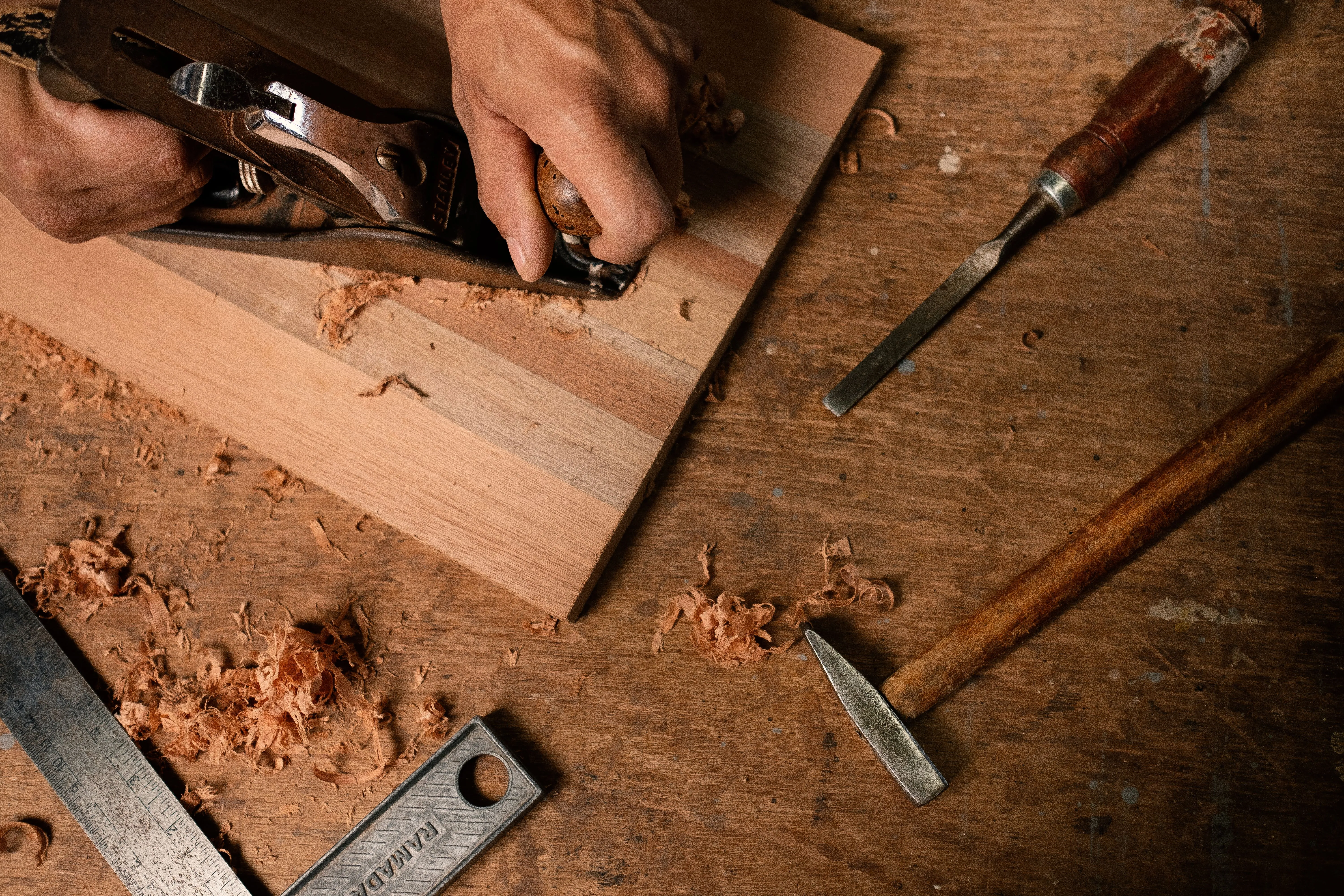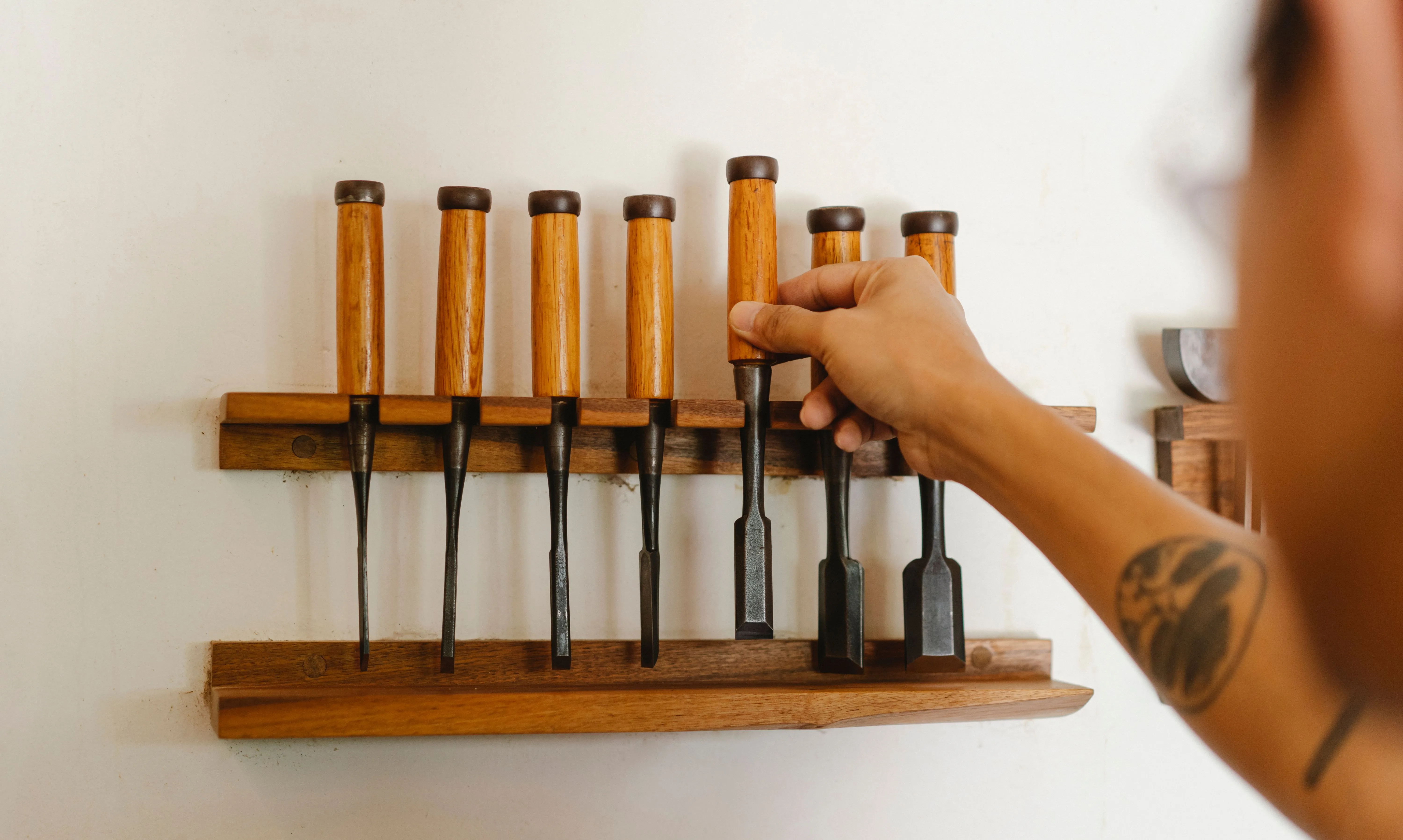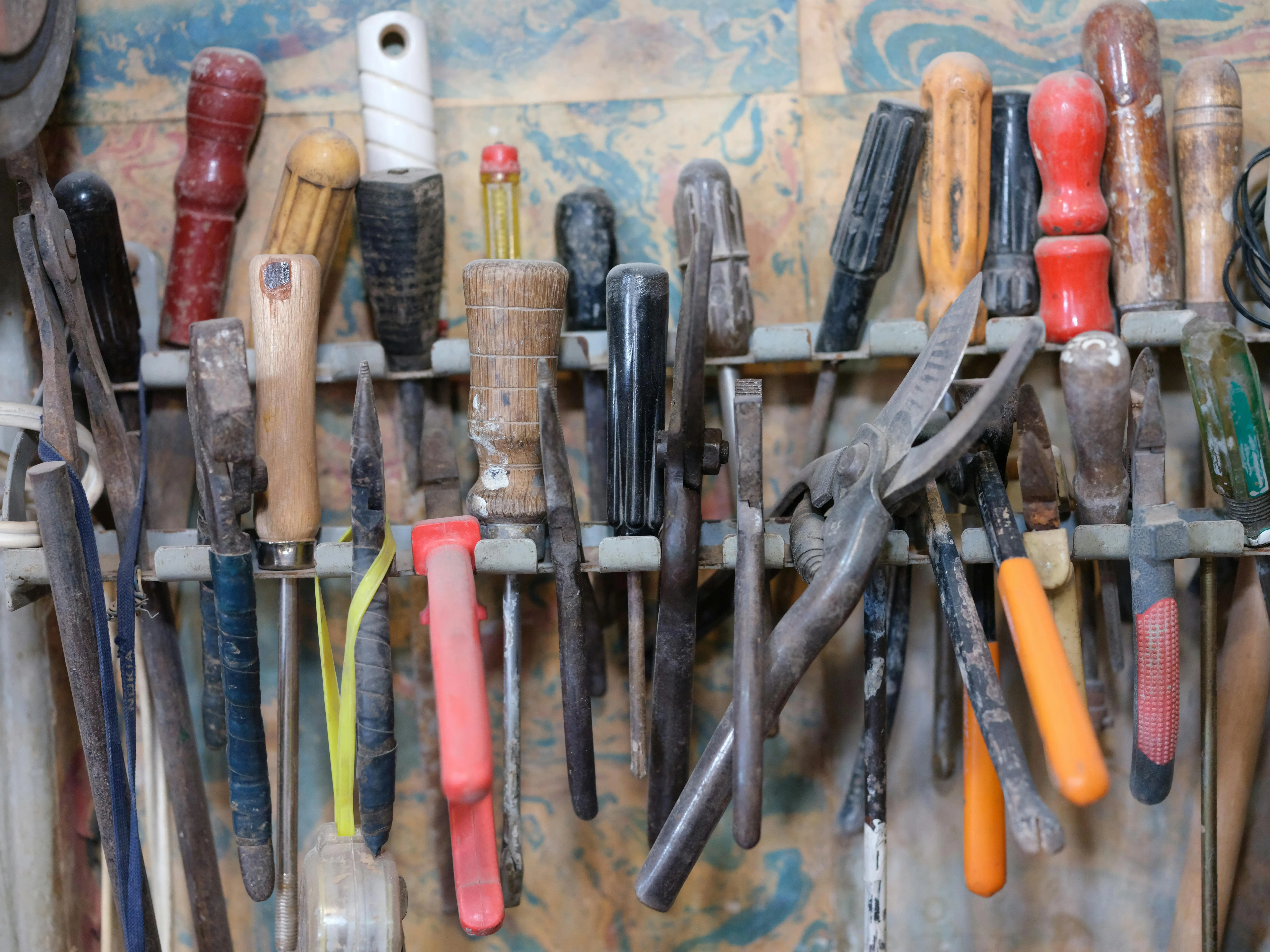
Complete List of Hand Tools: Names, Pictures, and Uses
The short answer: hand tools fall into seven working categories — striking, gripping and turning, cutting, measuring and marking, planing, fastening, and shaping. This list covers 50+ named tools across all of them, what each one does, and the detail most people get wrong. If a tool isn’t here, a photo upload to our AI identifier usually names it in seconds.
A few years back, a woman at an estate sale handed me a long, thin iron tool with a wooden handle at one end and a curved hook at the other. She wanted $3 for it. I recognized it immediately — a draw knife — but I’ve handed that same description to a dozen people who had absolutely no idea what it was. They just knew it looked old, possibly dangerous, and that it probably belonged to someone who knew what they were doing.
That’s the thing about hand tools. There are hundreds of them, many with names that make zero sense until someone explains the history, and a good chunk of them look like medieval instruments if you’ve never seen them in use. The list of hand tools in any well-stocked workshop is long, and the names don’t always give you much to go on.
This post covers 50+ named hand tools — what they look like, what they actually do, and the one detail about each that most people get wrong or don’t know at all. This isn’t a glossy catalog overview. These are tools I’ve used, identified, bought at estate sales, and taught other people how to use. I’ll flag the tricky ones and the ones that stump even experienced folks.
If you’re hunting down a mystery tool and can’t find it here, the AI identifier at WhatIsThisTool has helped a lot of people put a name to weird inherited hardware — worth bookmarking.
Striking Tools
These are your impact-delivering tools — the ones that deliver force to a surface or another tool. Every workshop starts here.
Claw Hammer
The claw hammer is so ubiquitous it barely needs an introduction, but a few things trip people up. It’s a steel or fiberglass-handled tool with a rounded face on one end for driving nails and a V-shaped claw on the other for pulling them. Most people don’t realize that the angle of the claw matters: a curved claw (like on a finish hammer) gives you better nail-pulling leverage; a straight claw (framing hammer) lets you pry boards apart. Estwing’s solid steel hammers are the gold standard for durability — they’re made from one piece of steel, so you never have to worry about the head flying off. The weight is stamped on the head; 16 oz is general purpose, 20 oz or 22 oz is for framing.
Ball-Peen Hammer
Two ends again, but here both ends are smooth metal — one flat face and one rounded “ball” on the other side. That ball peen is for peening metal (spreading the end of a rivet or shaping soft metal), setting punches, and striking cold chisels. It’s the standard hammer in metalworking shops. Ball-peen hammers are sometimes mistaken for other specialty hammers, but the rounded dome on one end is unmistakable once you know what to look for. Never use one on hardened steel fasteners — the face can chip.
Mallet
A mallet looks like a hammer but has an oversized head made from wood, rubber, or plastic rather than metal. The big head means the force spreads over more surface area, which is exactly what you want when you’re chiseling wood (you don’t want to damage your chisel’s handle) or assembling joinery that shouldn’t be dented. A wooden mallet used with a bench chisel is a classic pairing. Dead-blow mallets are filled with sand or shot to absorb bounce-back — they’re the ones with the slightly squishy-feeling head.
Cold Chisel
A cold chisel is a short, thick, hardened steel bar — usually 6 to 10 inches long — with a flat, beveled cutting edge. No handle. You hold the body and strike the flat end with a ball-peen hammer. It’s used for cutting or splitting metal, removing rusted bolts, cutting masonry, and chipping off old mortar. “Cold” means you’re working with metal at room temperature, not hot from a forge. If you find one with a mushroomed, splayed-out top, that’s from years of hammer strikes — they’re still usable but need to be re-ground to prevent metal chips from flying off.
Wood Chisel
Similar shape to a cold chisel but made for wood, not metal. A wood chisel has a hardened steel blade with a flat face on one side and a bevel on the other, set into a handle (traditionally wood, now often plastic). They come in sizes from 1/8” up to 2” wide. The flat back is critical — it should be dead flat for the chisel to cut cleanly. Most new chisels need the back flattened on a sharpening stone before they’re actually useful. Narex and Two Cherries are decent entry-level brands; old Stanley 750s are excellent if you find them.
Center Punch
A center punch is a small, pointed metal tool — think of a thick nail with a machined body. You place the tip on metal (or wood) and strike the opposite end with a hammer. The point leaves a small dimple that keeps a drill bit from wandering when you start a hole. Some center punches are spring-loaded: you push the tip into the surface and a spring mechanism releases, creating the dimple without a hammer. If you ever wondered what all those little dots marked on metal pieces are, that’s a center punch. Starrett makes excellent ones if you want to go quality.
Can’t identify a tool from your collection? Try our free AI identifier →
Gripping and Turning Tools
Wrenches and pliers are the two big families here. There are more types than most people realize, and the names of hand tools in this category cause more confusion than almost anywhere else.
Adjustable Wrench (Crescent Wrench)
Most people call any adjustable wrench a “Crescent wrench” — Crescent is actually a brand (part of Apex Tool Group), but the name stuck the way Kleenex did. The tool has a fixed jaw and a movable jaw adjusted by a worm gear on the side. They come in sizes from pocket-sized to 24” pipe monsters. The thing people get wrong: always position the wrench so the force is applied to the fixed jaw, not the adjustable one. The adjustable jaw will flex and round off fasteners if you pull against it.
Open-End Wrench
A flat wrench with U-shaped openings at both ends — usually two different sizes, one per end. The opening grabs two parallel faces of a bolt head. Open-end wrenches are fast because you can flip the wrench without removing it, ratcheting it around in tight spaces. They’re not as strong as box-end wrenches because they only contact two of the six sides of a hex fastener.
Box-End Wrench
Same flat body as an open-end wrench, but instead of a U-shape, the ends are enclosed rings with 6 or 12-point internal geometry that wraps fully around the fastener. Much less likely to slip and round off a bolt. The 12-point version needs less swing arc to ratchet — handy in tight spots but more likely to slip on a worn fastener than the 6-point version.
Combination Wrench
One end is open, one end is box. Both ends are the same size. This is the most practical wrench for most people — use the box end to break a fastener loose (it won’t slip), then switch to the open end for faster spinning. Klein Tools and Dish-brand combination wrenches are reliable workhorses.
Channellock Pliers (Tongue-and-Groove Pliers)
The official name is tongue-and-groove pliers or slip-joint pliers with a multi-position adjustment, but everyone calls them Channellock — after Channellock, Inc., the Pennsylvania company that’s been making them since 1933. They have angled jaws that can be set to multiple widths by sliding a tongue across a channel. The jaw pivot is offset from the grip axis, which is what gives them their distinctive angled look. They’re indispensable for plumbing and gripping large, irregular objects. The problem with cheap knockoffs is that the channel wears quickly and the jaws slip during use.
Needle-Nose Pliers
Long, tapered jaws that come to a point. They’re for reaching into tight spaces, bending wire, holding small parts, and getting into spots that would be impossible with standard pliers. The jaws are typically serrated. Most needle-nose pliers also have a wire cutter built into the base of the jaw — a feature a lot of beginners don’t notice at first. Klein Tools makes the ones electricians trust.
Slip-Joint Pliers
The basic, general-purpose pliers that most people think of first. A pivot pin that sits in an elongated slot allows the jaws to open wider in the “second position.” Standard jaws, standard serrations. These are the pliers in everyone’s junk drawer. They’re not ideal for any one task but serviceable for many. If you’re only seeing one slip adjustment, it’s slip-joint pliers; if there are multiple channels, it’s tongue-and-groove.
Locking Pliers (Vise-Grips)
Vise-Grip is a brand name (now owned by Irwin Tools) that’s become the generic term for locking pliers. A screw in the handle adjusts jaw width, and a toggle mechanism locks the jaws shut under pressure. You can lock them onto a fastener and leave them there — great for holding parts while you work, or for turning severely rounded-off bolts that nothing else will grab. They come in standard, needle-nose, and C-clamp configurations. The original Vise-Grips made in DeWitt, Nebraska are considered better quality than the current Chinese-manufactured versions — it’s a whole thing among tool people.
Pipe Wrench
Big, heavy, and mean-looking. A pipe wrench has a fixed lower jaw and a movable upper jaw that’s angled — when you turn it one way, the teeth bite into the pipe and grip harder under load. Turn it the other way and it releases. They come in sizes from 10” to 36” or larger. The teeth are aggressive and will mar finished pipe — use a strap wrench when appearances matter. Ridgid is the classic American brand; their orange pipe wrenches have been a plumbing staple for generations.
Basin Wrench
If you’ve never seen one, a basin wrench looks like something that belongs in a different category entirely. It’s a long, thin shaft — usually about 18 inches — with a pivoting jaw mechanism at one end and a T-handle crossbar at the other. It’s designed specifically for reaching up into the cramped space under a sink to tighten or loosen the mounting nuts that hold faucets to the basin. Without this tool, swapping a faucet requires either removing the sink or spending an hour with your face jammed against the cabinet floor trying to work a regular wrench in a space designed by someone with a grudge. Once you know what a basin wrench looks like, you’ll never mistake it for anything else.
Strap Wrench
A handle attached to a loop of rubber strap or nylon webbing. You loop the strap around whatever you need to turn — an oil filter, a pipe, a PVC fitting — and pull. The strap grips through friction rather than teeth, which means no marring. Great for chrome fixtures, polished fittings, and anything where bite marks would be a problem. They look almost too simple to work, but they work extremely well.
Can’t identify a tool from your collection? Try our free AI identifier →
Cutting Tools
Saws, knives, snips — every workshop needs them, and there are more types of hand saws than most people have ever counted.
Hand Saw (Crosscut)
The classic hand saw: a flat steel blade with teeth along one edge, set into a wood or plastic handle. A crosscut saw has teeth angled to cut across the wood grain — the teeth are shaped like small knife points that sever wood fibers. Crosscut saws typically have 8–12 teeth per inch (TPI); finer cuts need more teeth. If you find an old Disston saw with a medallion in the handle, you’ve got something worth cleaning up.
Rip Saw
Looks identical to a crosscut saw from a distance, but the teeth are shaped differently — they’re flat-topped like tiny chisels, designed to rip along the grain of wood. Fewer teeth per inch (usually 4–6 TPI). Most people never own one because a crosscut saw can do most jobs, and modern circular saws make ripping quick. But a sharp rip saw running with the grain of wood cuts faster than almost anything — it’s almost alarming if you’ve only ever used a crosscut saw for everything.
Hacksaw
A metal-framed saw with a thin, replaceable blade tensioned in a rectangular frame. The blade is removable — typically 12” — and comes in different TPI ratings for different materials. Fine teeth for hard metal and thin stock; coarser for softer metals and plastics. The frame adjustment lets you orient the blade at 0°, 45°, or 90°. Cheap hacksaws flex and wander; a solid frame with proper blade tension cuts in a straight line.
Coping Saw
A thin-bladed saw held in a deep C-shaped frame with a handle at one end. The blade can be rotated to cut in any direction, and the deep frame lets you cut curves inside a workpiece. The name comes from one of its primary uses: cutting a “cope joint” — the curved cut on the end of a molding that fits over the profile of another piece. The blade is under tension from the frame; most of them have a little thumbscrew to adjust tension or rotate the blade angle.
Japanese Pull Saw
This is where Western and Eastern woodworking philosophy diverge. A Japanese pull saw — sometimes called a Ryoba or Kataba — cuts on the pull stroke rather than the push stroke. Because the blade is only under tension when cutting (not compression), the blade can be much thinner, which means a narrower kerf and a finer, cleaner cut. The teeth are hardened through induction hardening and are usually not intended to be resharpened; you buy replacement blades. If you’ve ever tried one, you don’t go back. The Suizan and Suzan brands are popular entry points.
Utility Knife
A retractable or snap-off blade in a metal or plastic handle. The trapezoidal blades that most utility knives use are called hook blades, carpet blades, or standard blades depending on their profile. Stanley’s classic yellow-handled utility knife has been around since the 1960s. The snap-off style common in Japan and now popular everywhere lets you break off a dull section to expose fresh blade. Change the blade more often than you think you need to — a sharp utility knife is safe; a dull one requires force and that’s where accidents happen.
Tin Snips (Aviation Snips)
Shears for cutting sheet metal. Standard tin snips look like heavy scissors. Aviation snips (or compound-action snips) have a second pivot that multiplies mechanical advantage, making them much easier to use for thick-gauge metal or prolonged cutting. The color coding on aviation snips actually means something: yellow handles cut straight and wide curves, red handles cut left curves, green handles cut right curves. Most people just grab whatever color is nearest, which is fine for straight cuts.
Wire Cutters / Diagonal Pliers
Also called “dikes” (short for diagonal cutters) by electricians. A pliers-type tool with cutting edges set at a diagonal angle across the face, meeting at a point. They cut wire flush or close to a surface. Don’t ever use them on hardened wire or nails — you’ll nick the cutting edges and they’ll never close cleanly again. Knipex makes the best diagonal cutters on the market if you want to go quality.
Bolt Cutters
Big, heavy, and purposeful. Long handles (often 24”–36”) connected to compound-lever jaws that create enormous cutting force — enough to cut through padlock shackles, chain links, rebar, and wire rope. The handles are usually covered in rubber or plastic grips. The hardness of the cutting jaws determines what they can cut; cheaper bolt cutters dull quickly on hardened steel. They look intimidating and they are. A beat-up old pair still works as long as the jaw edges aren’t cracked.
Can’t identify a tool from your collection? Try our free AI identifier →
Measuring and Marking Tools
Nobody talks about measuring tools with the same enthusiasm as planes or saws, but bad measurements ruin good work. These are worth knowing by name.
Tape Measure
Everyone’s got one. The spring-loaded steel tape in a plastic or rubber case. The hook on the end is intentionally loose — it slides exactly one tape-thickness to account for the hook’s own thickness whether you’re hooking onto a surface or butting up against one. If your tape is reading wrong, check the hook rivets first. Stanley and Milwaukee make solid ones; the “fat max” style with a wider blade holds itself extended longer (useful when measuring solo).
Combination Square
An adjustable 12” ruler with a head that slides and locks anywhere along the blade. The head has a 90° face and a 45° face built in, plus a small spirit level bubble. You can use it to scribe a line parallel to an edge, check squareness, find 45-degree angles, and (with the blade extended) as a depth gauge. Starrett combination squares are the benchmark for accuracy — a used Starrett is worth more than a new Chinese knockoff of the same age, because the cheap ones aren’t actually square.
Speed Square
A triangular piece of aluminum or steel, usually about 7” on the short sides. Also called a rafter square or layout square. It has degree markings along the hypotenuse. Every carpenter uses one to mark square cut lines on lumber, guide circular saw cuts, and check angles. The triangular shape means it can’t rack out of square the way a regular square can. Swanson makes the ones you’ll find on every job site.
Carpenter’s Square (Framing Square)
An L-shaped flat steel or aluminum tool with a long blade (24”) and a shorter tongue (16”). The inside and outside corners are both square. Rafter tables are usually stamped right into the blade — numbers for calculating rafter lengths based on pitch, which is what makes a framing square genuinely useful beyond just drawing right angles. The problem most beginners have: they try to use a framing square like a speed square and end up fighting it in cramped spaces. It’s a layout tool, not a saw guide.
Level (Spirit Level)
A long bar — aluminum, magnesium, or wood — with small vials set into it. Each vial contains liquid with a bubble; when the bubble centers between two lines, that surface or edge is level (horizontal) or plumb (vertical). Modern levels have three vials: one for level, one for plumb, and one for 45 degrees. A good 48” level is useful for most jobs; a 6” torpedo level fits in your pocket and handles tight spaces. The vials do drift with age and abuse — check your level occasionally against a known-flat surface.
Chalk Line
A metal or plastic case on a handle, filled with powdered chalk and containing a long string wound onto a reel. You hook one end, pull the string out to your mark, hold it taut, then snap it — the string hits the surface and leaves a straight chalk mark. Used constantly in flooring, framing, and roofing to mark long straight lines that would be impossible to draw freehand. Blue chalk washes off; red chalk is nearly permanent on porous surfaces. Don’t fill yours with red chalk unless you’re sure about the line.
Marking Gauge
A small tool with a wooden or metal fence that slides along a beam, with a scribing pin or blade at the end. You set the fence to a measurement, run it along the edge of a board, and the pin scores a line parallel to that edge. Marking gauges are a woodworking staple that a lot of people outside woodworking have never seen. The wheel marking gauge — with a small circular cutting wheel instead of a pin — gives a cleaner, more precise line and is now more popular than the old pin type.
Dividers / Compass
Two hinged legs, each ending in a hardened point. Also called wing dividers. You set the span to a measurement and use them to scribe circles, transfer measurements, or step off equal distances along a line. The difference between dividers and a compass: dividers have two points, a compass has one point and one pencil or pen leg. In machinist and metalworking contexts, a divider is almost always the right word.
Vernier Calipers
These are the things that look like a cross between a ruler and a complicated jaw mechanism. They have two main jaws for measuring outside dimensions, two smaller jaws on top for inside dimensions, and a depth rod sticking out the end. The sliding scale (vernier scale) on the jaw lets you read down to 0.001” or 0.02mm. Digital versions make the reading easier but the mechanical ones are more satisfying and more reliable over time. Mitutoyo is the brand machinists reach for. If you find an old Brown & Sharpe caliper, take care of it.
Feeler Gauge
A fan-like set of thin metal strips, each stamped with its thickness. You use them to measure small gaps — spark plug gaps, valve clearances in engines, the gap in a joint. You insert strips (sometimes stacking them) until one fits snugly without forcing. They’re often found in toolboxes and inherited workshops where the owner did their own engine work. The strips are fragile and prone to bending if you force them; once bent, they give you wrong readings.
Can’t identify a tool from your collection? Try our free AI identifier →
Woodworking Planes
Here’s where the names of hand tools get genuinely confusing for most people — and where I spend the most time explaining things to people who come to me with inherited tool collections. Planes are some of the most common mystery tools in old toolboxes.
Block Plane
The smallest common bench plane, usually 6–7 inches long, held in one hand. The blade is bedded at a low angle (usually 12° or 20°) with the bevel facing up — the opposite of most other planes. Block planes are for trimming end grain, knocking down sharp edges, and fine fitting work. The adjustable mouth opening is what makes them versatile. Stanley made millions of them; the No. 60½ and No. 9½ are the most common ones you’ll find.
Bench Plane (No. 4 Smoothing Plane)
The No. 4 is probably the most common vintage plane you’ll find at estate sales — more were made than almost any other size, and it’s the go-to smoothing plane for final surface prep. About 9 inches long, with a 2-inch blade, held with two hands. It flattens and smooths already-dimensioned wood. If you see a Stanley plane with a frog (the angled casting that holds the blade), lateral adjustment lever, and depth knob, you’re looking at a Bailey-pattern bench plane. The type number system Stanley used is how collectors date them — a Type 11 from 1910 is different from a Type 19 from 1962.
Jack Plane (No. 5)
Same basic form as the No. 4 but longer — about 14 inches. The name “jack” comes from “jack of all trades” — it’s the workhorse plane for rough dimensioning, removing a lot of material quickly. Beginners often confuse the No. 5 with the No. 4 because they look nearly identical; the length is the tell. The No. 5 gets set up with a slight camber on the blade for aggressive stock removal; the No. 4 gets set up with a flat blade for smooth finishing cuts.
Jointer Plane (No. 7 / No. 8)
At 18–24 inches long, these are the long planes. The extra length bridges low spots and rides over them rather than dipping into them — which is exactly what you want when you’re truing up a board edge or flattening a glued-up panel. The No. 7 is 22 inches, the No. 8 is 24 inches and is the largest of the common Stanley bench planes. Finding a flat, crack-free No. 7 or 8 tote (the rear handle) is often the challenge with old examples — the rear handles tend to be cracked right where they attach to the body.
Router Plane
This is the mystery tool that stumps people constantly. A router plane has a flat base with an adjustable cutting iron that hangs down through the center, cutting a flat-bottomed groove or recess. It looks like a plane that someone drilled a hole through and hung a cutting iron through the hole at a right angle to the sole. It’s used to clean up the flat bottoms of dadoes, mortises, and hinge recesses. Old Stanley 71 router planes are some of the most sought-after vintage planes — they’re genuinely useful tools that do things no other hand tool does as cleanly.
Shoulder Plane
A narrow, precise plane with the blade running the full width of the sole — all the way to both edges. This is specifically for planing the shoulder of a tenon (the flat face perpendicular to the tenon itself) or for trimming rabbet joints. Because the blade extends to the edges, it can get into corners. Lie-Nielsen and Veritas make excellent modern shoulder planes; old Record shoulder planes from England are good vintage finds. If you pick one up and notice the sides are ground square to the sole, you’re looking at it correctly — that squareness is the whole point.
Can’t identify a tool from your collection? Try our free AI identifier →
Fastening Tools
Screwdrivers (Flathead, Phillips, Torx, Robertson)
Four main drive types dominate. Flathead (slotted) is the oldest and most frustrating — the driver cams out easily. Phillips was designed to cam out intentionally to prevent over-torquing on assembly lines, which is maddening for anyone trying to remove old screws. Torx (the six-pointed star) is far superior and is now standard in automotive and electronics. Robertson (the square drive) is a Canadian invention from 1908 and remains common in Canada — if you find square-socket screws and don’t know what they are, now you do. The Robertson is arguably the best manual drive system ever invented, but American manufacturers were slow to adopt it.
Nail Set
A short, tapered punch used with a hammer to drive nail heads below the wood surface so they can be filled with putty. They come in three tip sizes — 1/32”, 2/32”, and 3/32” — corresponding to the most common finish nail sizes. The tip is slightly cupped or concave so it seats on the nail head without slipping. People often mistake nail sets for center punches, but the cupped tip and the typically more slender profile separate them.
Staple Gun
A hand tool that drives U-shaped metal staples into wood, fabric, and similar materials. The traditional T-50 staple gun by Arrow Fastener has been around since 1955 and is essentially unchanged because the design works. Heavy-duty staple guns use a hammer mechanism — the kind used for house wrap and roofing felt. Electric staple guns exist for high-volume work, but the manual Arrow is what most people reach for.
Pop Rivet Gun
A pliers-like tool that pulls a mandrel through a hollow rivet, causing the back end to mushroom and clamp two layers of material together — then the mandrel snaps off flush. The discarded mandrel stems that roll around tool drawers are one of the most commonly found mystery items in garage toolboxes. Pop rivet guns are used extensively in automotive bodywork, HVAC installation, and anywhere two thin materials need to be permanently joined.
Tap and Die Set
A set of cutting tools for creating or repairing threaded holes (taps) and external threads on rods or bolts (dies). A tap looks like a fluted bolt; a die looks like a thick washer with internal cutting teeth. The T-handle wrench that drives them is part of the set. Taps and dies come in standard and metric sizes. The problem with inherited sets: they’re often incomplete, with the most-used sizes missing, and the labeling is tiny and often illegible.
Shaping and Finishing Tools
Rasp
A rasp looks like a coarse file, but instead of parallel teeth cut in rows, it has individual raised points pressed into the surface. Those points tear and remove material aggressively — wood especially. You use a rasp for rapid shaping when you need to remove a lot of material quickly without power tools. Cabinet rasps and pattern-maker’s rasps have more closely spaced teeth and leave a smoother surface; Farrier’s rasps (the huge ones used on horses’ hooves) are coarser and more aggressive. Auriou and Liogier from France make hand-stitched rasps that are extraordinary tools if you do a lot of carving or sculpting.
File (Flat, Half-Round, Round)
Files have parallel rows of sharp teeth cut at an angle across a flat or shaped surface. They remove material slower than rasps but leave a smoother finish. The main profiles: flat (for flat surfaces), half-round (one flat side, one curved — works on both flat and concave surfaces), round (also called a “rat-tail file” — for enlarging holes and inside curves), and triangular (for sharpening saw teeth and getting into tight corners). The cut of a file (bastard, second cut, smooth) describes tooth coarseness. Nicholson is the classic American brand.
Spokeshave
A blade set between two handles, used for shaping curved surfaces — the name comes from its original use shaping wooden wheel spokes. You pull it toward you (or push, in some designs) along a curved surface, and the blade takes a thin shaving. The depth of cut is adjustable. Spokeshaves are common in chair-making, tool handle shaping, and any work involving convex or concave curves. They look a bit like a very wide plane with handles on both sides. Stanley made them for generations; a No. 151 spokeshave is an easy find.
Card Scraper
This might be the most underrated hand tool in woodworking. A card scraper is just a thin, flat piece of hardened steel — roughly the size of an index card, hence the name. No handle. You flex it slightly with your thumbs and push or pull it across a wood surface. The cutting edge is a tiny hook (called a burr or wire edge) that you raise with a burnisher. A properly prepared card scraper removes gossamer-thin shavings from figured wood that a plane would tear. Cabinet makers swear by them. The setup takes practice, but once you can tune a card scraper, you’ll understand why old-time furniture makers didn’t need sandpaper.
Cabinet Scraper
Basically a card scraper but larger, set into a wooden or metal body with handles. The Lie-Nielsen No. 80 cabinet scraper and the Stanley No. 80 are the classic versions. The body lets you apply consistent pressure and control depth more easily than a bare card scraper. It’s for larger flat surfaces — table tops, wide panels — where the handheld card scraper gets tiring. Old No. 80s are common at estate sales and usually just need a new edge prepared to work perfectly.
Specialty and Lesser-Known Tools
This is the section I get the most questions about. These are the tools that show up in old toolboxes and at estate sales with regularity, that most people under 50 have never used or seen in action. The hand tool identification problem is biggest here.
If you’ve got something in your hand and it’s not in this list, the AI identifier at WhatIsThisTool can often put a name to it from a photo — useful when you’re staring at something that defies description.
Brace and Bit (Egg-Beater Drill)
Before power drills, there was the brace. A brace is a U-shaped crank with a chuck on one end and a palm grip on the other — you hold the palm grip in one hand and rotate the U-shaped body with the other to drive auger bits. The “egg-beater” drill is a slightly different tool: a hand-cranked drill with a gear and pinion mechanism (like an egg beater), smaller, and used for lighter drilling. Both were made by companies like Millers Falls, North Brothers (Yankee), and Stanley. Finding a matching brace and set of auger bits is a beautiful thing. The bits are identified by a number stamped on the tang — that number is the bit diameter in 16ths of an inch.
Draw Knife
This is the one from the estate sale I opened with. A draw knife has a long, straight or slightly curved blade with handles extending at right angles from both ends. You pull it toward you (hence “draw”) to shear off material — wood, primarily. It’s a tool for rough shaping: making chair legs, shaping tool handles, debarking poles. It looks alarming. It cuts fast and aggressively. The skill is in learning to read grain direction so you’re always cutting with the wood, not against it. In the right hands, a draw knife removes more material per stroke than almost anything else in the hand-tool shop.
Froe
A froe is a blade about 12–18 inches long with a handle set perpendicular to the blade at one end — so it’s L-shaped, essentially. You position the blade across a wood end grain and drive it with a mallet, then lever the handle to split the wood along the grain. The process is called “riving,” and it makes shingles, shakes, barrel staves, and chair parts. If you’ve ever seen someone making traditional wooden shingles, the froe is the tool doing the splitting. The grain-split surfaces are often stronger than sawn surfaces because the split follows the wood fibers rather than cutting through them.
Honing Guide
A small jig that holds a chisel or plane blade at a consistent angle while you hone it on a sharpening stone. The blade gets clamped in the guide, and the guide rolls on little wheels as you push it back and forth across the stone. It takes all the guesswork out of maintaining the correct bevel angle. Beginners need them; experienced sharpeners often learn to freehand eventually. The Eclipse-style side-clamping guide and the Veritas Mk.II are the two dominant designs. People who’ve never sharpened tools by hand often can’t identify what this is at all — it looks like a small rolling clamp with a thick piece of metal sticking out the front.
Scratch Awl
A pointed steel rod set in a handle — typically a hardwood or plastic turned handle. You use it to scribe lines, start screw holes, and pierce materials. It’s sharper and more robust than an ice pick but similar in concept. The difference between a scratch awl and a center punch: a scratch awl has a gradual taper and is used with hand pressure; a center punch is struck with a hammer and has a steeper point angle. Electricians use them to mark conduit bends; woodworkers use them to score cabinet layout lines and pierce locations for screws.
Reamer
A tapered or straight tool with cutting flutes used to enlarge, smooth, or true an existing hole. Tapered reamers look like a very pointy drill bit; straight reamers look like a highly fluted, very precise drill bit. In metalworking, a reamer gives you a hole that’s dimensionally accurate to a tolerance a drill bit can’t achieve. In woodworking, a tapered reamer creates the tapered sockets in Windsor chair seats that accept tapered chair legs — the fit is wedged tight by the geometry. Vintage reamers are common in machinist tool lots; they’re solid high-speed steel and last essentially forever.
Putting It All Together
Any experienced person who’s spent time in workshops will tell you the same thing: you can know the names of hand tools all day long, but you still get stumped. A hand tool identification problem I run into regularly is old wrenches — early American wrench design was all over the map, with dozens of manufacturers making proprietary patterns, and figuring out who made what and when requires either a reference library or a lot of time squinting at patent marks.
The same goes for pre-power-tool era drilling and boring equipment. There’s a whole universe of vintage braces, drill presses, and boring machines that lived in cabinet shops and furniture factories, and most of those tools have no online presence. Even with a complete list of hand tools in front of you, the odd one slips through.
The honest answer is that nobody knows every tool. After years of workshops, estate sales, and toolboxes, I still run across things I can’t immediately name. That’s part of what makes old tools interesting — there’s always more to know.
When you’re staring at something that doesn’t match anything in this list, the best move is a photo. WhatIsThisTool’s AI identifier has handled some genuinely obscure identification challenges — reamers, specialized planes, old brace bits, early electrical tools — and it’s a practical first stop before you go down a research rabbit hole. It won’t know everything (nothing does), but for the types of hand tools that show up in typical inherited collections, it covers a lot of ground.
The tools you’re likely to find in most workshops — the ones covered in this list — represent centuries of problem-solving and refinement. Every one of them exists because someone needed to cut, shape, measure, drive, or join something, and they figured out the best way to do it. Understanding what each one is called and what it does is the first step toward using them well. Or at least toward not buying that $3 draw knife at the estate sale without knowing what you’ve got.
Looking for a tool that’s not on this list? Upload a photo at WhatIsThisTool.com and get an instant identification.