Cast Iron Rescue: Bringing a Rusted Pan Back to Life
The short answer: rust never killed a cast iron pan — only cracks do. Soak light rust off in 50/50 vinegar and water (30 minutes to 4 hours), strip heavy crust with electrolysis or lye, scrub to bare gray iron, dry on a hot burner, then bake on 3–5 paper-thin coats of oil at 450–500°F. A weekend of mostly waiting turns a $5 yard sale wreck into a pan that outcooks new iron.
The ugliest pan I ever restored came out of a barn in upstate New York — solid orange, rough as sandpaper, with what I’m fairly sure was forty years of mouse traffic baked onto it. The seller wanted three dollars and seemed embarrassed to take it. Under the rust: a Wagner Ware No. 9, machined smooth, dead flat, not a crack on it. It’s been my daily egg pan for six years.
That’s the thing people don’t believe until they’ve done one: rust is cosmetic. Iron oxide sits on the iron; strip it off and the metal underneath is usually pristine. Here’s the full process, from triage to first fried egg.
Step 1 — Assess Before You Invest
Five minutes of inspection saves a weekend of wasted effort. Check three things:
Cracks. Hold the pan by the handle and tap the rim with a knuckle. Healthy iron rings faintly, like a dull bell. Cracked iron thuds. Visually trace any suspicious line — hairline cracks love the handle junction and the sidewall. A cracked pan can’t be safely restored for cooking. Pass, or keep it as a wall hanger.
Warp. Set it on the flattest surface you have (glass stovetop, granite counter). If it spins or rocks, it’s warped — usually from being quenched hot under a cold tap decades ago. Mild warp is livable on a gas flame, useless on induction or glass-top.
Pitting. Deep pinholes from long rust exposure. On the exterior: cosmetic. On the cooking surface: the pan will still work, but it’ll never release eggs like smooth iron, and collector value drops by half or more.
While you’re inspecting, look at the markings. If you see GRISWOLD, WAGNER, or block-letter ERIE under the grime, read our Griswold identification guide before proceeding — you may be holding a collector piece worth restoring gently, or worth selling as-is to a specialist. Can’t read the mark at all? Upload a photo and find out what you’ve got first.
Step 2 — Choose Your Stripping Method
Three methods, in escalating order of effort:
Vinegar bath (light to moderate rust)
Mix white vinegar and water 50/50 in a container that submerges the pan. The acid dissolves rust in 30 minutes to 4 hours. Check every 30 minutes — this is the one method that can damage the pan, because once the rust is gone, vinegar starts etching healthy iron. The pan is done when the rust wipes off under your thumb.
Lye bath (heavy carbon and grease, mild rust)
A sealed tub of water and 100% lye drain cleaner (sodium hydroxide, 1 lb per 5 gallons) dissolves decades of baked-on carbon without touching the iron at all — you cannot over-soak in lye. It’s slower on rust than vinegar, so heavy-crust pans often get lye first (for the carbon), vinegar second (for the rust). Wear gloves and eye protection; lye deserves respect.
Electrolysis (the serious option)
A battery charger, a sacrificial steel anode, and a tub of water with washing soda. Current pulls rust off the iron overnight and won’t harm the metal — it’s what museum conservators use. If you plan to restore more than two or three pans, the one-time setup beats everything else. Plenty of r/castiron threads document the build; total cost runs about $40 if you own a charger.
Skip entirely: angle grinders, wire wheels on drills, and sandblasting. They strip rust fast and destroy the machined surface — and any collector value — permanently.
Step 3 — Scrub, Rinse, and Outrun the Flash Rust
After the bath, scrub under hot running water with a stainless steel scrubber or chain mail until you’re looking at uniform bare gray iron. Any black patches that survive a lye bath are stable old seasoning — leave them if smooth.
Now move fast: bare iron starts re-rusting in minutes. Dry the pan with a towel, then set it on a burner over medium heat for five minutes until every trace of moisture is gone. If a faint orange blush appears while you work (flash rust), a quick scrub with oil takes it off.
Step 4 — Season: Thin Coats Win
Seasoning is oil polymerized into a hard, slick film by heat. The entire craft reduces to one rule: thin coats.
- With the pan warm, rub oil over every surface — inside, outside, handle.
- Then wipe it off like you made a mistake. The pan should look matte, barely damp. If it shines, it’s too thick.
- Bake upside down (foil on the rack below) at 450–500°F for one hour. Cool in the oven.
- Repeat 3–5 times. Each round deepens the color from gray toward bronze toward black.
Oil choice: grapeseed and flaxseed both polymerize well at high heat. Flaxseed builds the hardest, prettiest finish but can flake if applied thick; grapeseed is more forgiving and cheaper. Crisco works fine too — it seasoned most of the pans in America for a century. Avoid olive oil (low smoke point) for seasoning runs.
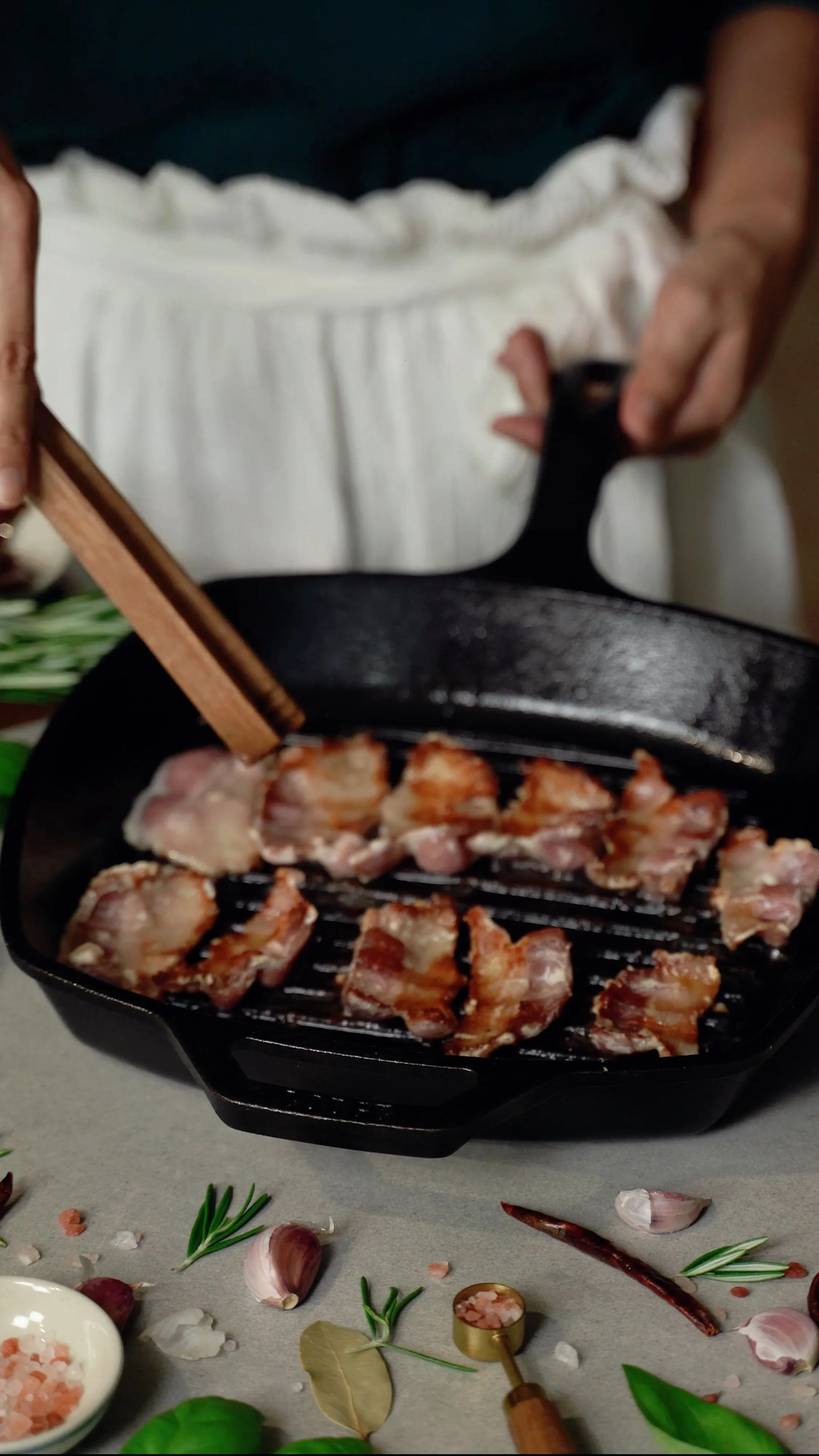
A freshly seasoned pan looks semi-gloss black-bronze. It will darken and slick up further with cooking — the first dozen uses should be fat-friendly food: bacon, fried potatoes, cornbread. Hold off on tomato sauce and wine deglazing until the finish matures.
Step 5 — Keep It That Way
Daily care takes thirty seconds and makes restoration a one-time event:
- Rinse hot with water and a brush right after cooking. A drop of dish soap is fine — the “no soap ever” rule dates from lye-based soaps that no longer exist.
- Dry on the burner, not in the rack.
- Wipe a drop of oil around the cooking surface while warm.
- Never soak it, never put it away wet, never run it through the dishwasher.
Store with a paper towel in the pan if you stack cookware — it wicks ambient moisture and protects the seasoning from the pan above.
Frequently Asked Questions
Q: Can badly rusted cast iron always be saved? A: If it isn’t cracked or deeply pitted on the cooking surface, yes — even pans that are solid orange. Rust depth is almost always shallower than it looks.
Q: Does restoring a vintage pan hurt its collector value? A: Proper restoration (electrolysis or lye, never power tools) increases the value of common and mid-tier pieces — collectors pay more for ready-to-use iron. For genuine rarities, sell as-found or restore gently; specialist buyers prefer doing their own conservation.
Q: Vinegar, lye, or electrolysis — which should I use? A: Light rust only: vinegar, watched closely. Heavy carbon crust: lye first. Multiple pans or serious rust: build the electrolysis tank. When unsure, lye then vinegar is the safe sequence — neither step can be overdone except the vinegar.
Q: Why did my seasoning come out sticky? A: Too much oil. Sticky seasoning is unpolymerized oil pooled on the surface. Scrub the sticky layer back, then re-bake with coats wiped nearly dry.
Q: How many seasoning coats does a restored pan need? A: Three to five oven rounds gets a working finish; cooking does the rest. The glassy black pans you see online are usually two years of frequent cooking, not twenty oven cycles.